
EU lays out $18B satellite constellation plan, with Spanish firm winning key role
Overall investment in the high profile program is expected to push beyond $18 billion, with first satellite launches slated for 2029.
Overall investment in the high profile program is expected to push beyond $18 billion, with first satellite launches slated for 2029.

This week on The Break Out, a brief review of small unmanned systems as well as space-launch options showcased at ILA Berlin 2026.

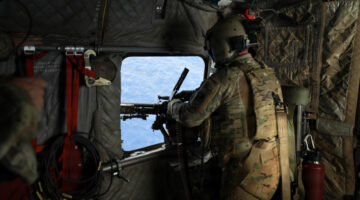
Distance, sparse infrastructure, and contested communications force a different approach to connectivity.
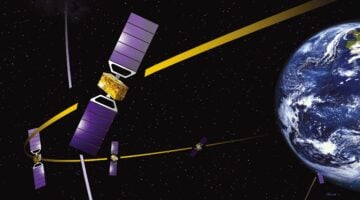
The European Space Agency also is kicking in funds for the BEACONSAT, being developed by Austrian startup GATE Space.

Germany is sprinting to pump up its military space systems, perhaps changing the balance of power in setting European-wide priorities.

'Unsettled' is a polite word for 2025 in the space domain.

ESA's ruling Council of Ministers approved a whopping $25.7B in funds over the next three years — a 32 percent increase over the previous three-year budget.

New threats, including downstream attacks, drive the need for improved tools to protect critical assets.
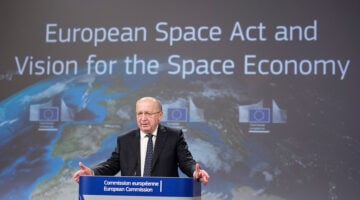
The State Department's damning critique argues that, if enacted, the draft law would imperil cooperation on "space weather, remote sensing, space exploration, spaceflight safety, space debris mitigation and remediation, [and] communications."

Since its founding 50 years ago, the European Space Agency has shunned involvement in military space activities.

"Project Bromo is a sovereignty play," Caleb Henry, research director at Quilty Space, told Breaking Defense.

Germany is not the first European country to join, but as a political and economic center of the continent, Berlin's move could convince several others to follow suit.

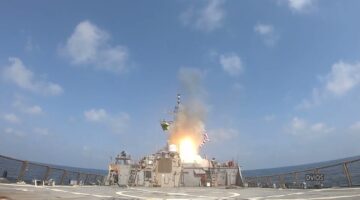
Expanding manufacturing capacity is critical to producing missiles, radars, and launch systems.

"Russia’s illegal invasion of Ukraine has highlighted the importance of a persistent space surveillance capability," said the United Kingdom, as European nations (and Canada) band together.

The concept of solar power satellites, first posited in 1968, seems to be back in fashion — not just in the US with initiatives at DoD and NASA, but around the globe, including in Beijing.